
Stevie Wonder’s Early Years at Motown: The Making of a Genius
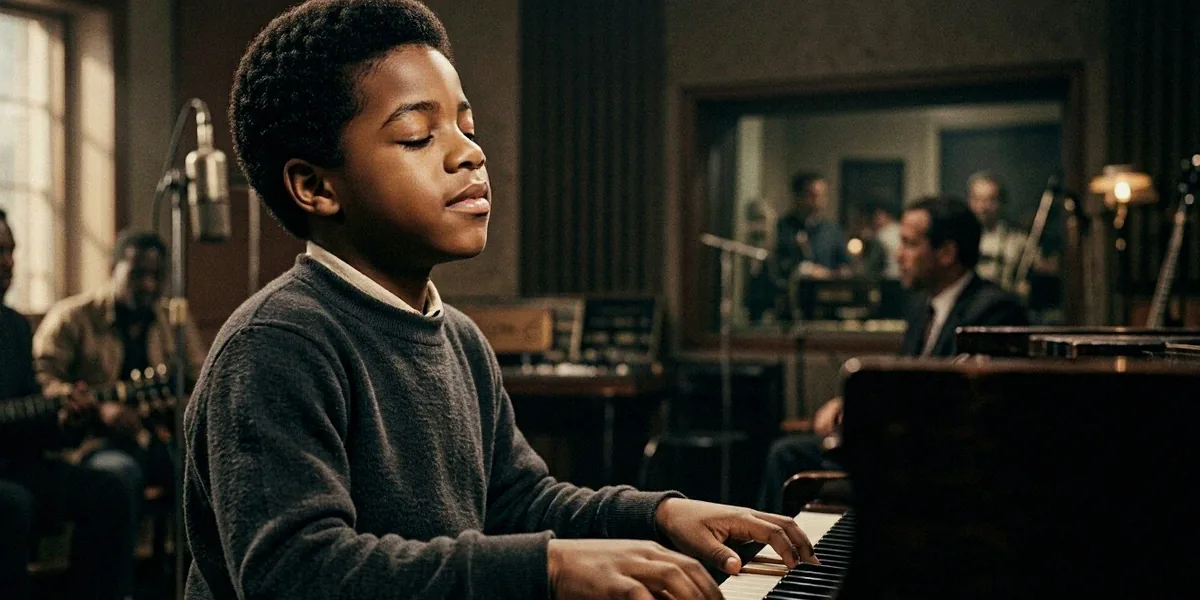
Picture a twelve-year-old blind boy from Saginaw, Michigan, walking through the doors of Hitsville U.S.A. for the first time. He can’t see the gold records on the walls or the cramped studio where Smokey Robinson just cut another hit, but he can feel the vibration of the place — the bass thumping through the floorboards, the horns warming up in the hallway. That kid, Stevland Hardaway Judkins, would soon become Stevie Wonder, and that building on West Grand Boulevard in Detroit would become the launchpad for one of the most remarkable careers in music history. Before Songs in the Key of Life, before “My Cherie Amour,” before the Grammys and the global fame, there was a child prodigy with a harmonica, a drum set, and something to prove. We want to take you back to those Motown beginnings, because understanding them is the key to understanding everything Stevie Wonder became.
From Saginaw to Hitsville: The Discovery of a Prodigy

Stevie Wonder was born in Saginaw, Michigan, on May 13, 1950, and moved to Detroit as a child with his mother, Lula Mae Hardaway. The move put him right in the heart of a city that was, at that moment, the beating pulse of American popular music. What happened next is the stuff of Motown legend.
Born Stevland Hardaway Judkins: Early Life and Blindness
Born Stevland Hardaway Judkins, the future superstar lost his sight shortly after birth due to retinopathy of prematurity, a condition linked to oxygen therapy given to premature infants. Blindness never slowed him down. By age four he was banging on pots and drums, and by nine he had taught himself piano, harmonica, and drums well enough to perform at church and on neighbourhood porches. His mother encouraged every bit of it, and his energy was impossible to ignore.
The Miracles Connection: How Ronnie White Changed Everything
The break came through a family friend and a member of one of Motown’s biggest acts. Ronnie White of The Miracles saw the young performer and was floored by what he could do. White brought him to Motown’s attention — a moment that changed the trajectory of popular music. Without that introduction, there’s no “Fingertips,” no Songs in the Key of Life, no decades of brilliance.
Berry Gordy’s Gamble: Signing a 12-Year-Old to Motown
Berry Gordy wasn’t easily impressed, but the audition won him over. At just eleven years old, Stevie performed for Gordy, who signed him to Tamla Records, a Motown subsidiary, when Stevie was twelve. It was a gamble — a child artist with no track record — but Gordy recognized raw genius when he heard it. That signature launched what the world would soon know as “Little Stevie Wonder.”
Little Stevie Wonder: The 12-Year-Old Sensation
The “Little” prefix wasn’t just marketing. It told audiences exactly what they were getting: a kid who could play circles around grown musicians. Motown leaned into the novelty, but the talent underneath was anything but a gimmick.
The ‘Little’ Stevie Wonder Era: Early Singles and Albums
His first album, The Jazz Soul of Little Stevie, arrived in 1962 when he was still only twelve. It was an instrumental record that showcased his harmonica and keyboard work more than his voice. Early singles like “I Call It Pretty Music, But the Old People Call It the Blues” didn’t set the charts on fire, but they established him as a serious musician, not a novelty act.
Fingertips (Part 2): The Live Hit That Made History
Everything changed with “Fingertips (Part 2).” Recorded live at the Regal Theater in Chicago during a Motown revue, the track captured a twelve-year-old commanding a crowd with a bongo-driven groove, a wailing harmonica, and a call-and-response energy that felt electric. In 1963, “Fingertips (Part 2)” topped the Billboard Hot 100, making Stevie Wonder the youngest artist ever to reach number one on that chart. That record still stands.
Touring with Motown Revues: Learning from the Legends
Motown’s package tours were legendary, and Stevie was right in the middle of them alongside Marvin Gaye, The Supremes, The Temptations, and Smokey Robinson. Watching those performers night after night taught him stagecraft, timing, and how to hold an audience. It was an education no music school could offer.
Growing Up in the Motown Machine: Teenage Years and Transition
Child stardom is a trap for most. For Stevie, it was a training ground. As he grew into his teens, his voice changed, his interests deepened, and Motown had to figure out what to do with an artist who was no longer “little.”
The Voice Change: From Boy Soprano to Soulful Tenor
When his boy soprano gave way to a richer, rougher tenor, some at Motown worried the hits would dry up. Instead, the new voice gave him a grit and emotional weight that suited soul music perfectly. The transition years produced some of his most underrated vocal performances.
Dropping ‘Little’: The Rebranding of Stevie Wonder
By 1964, Motown dropped the “Little” and he became simply Stevie Wonder. It was a smart move — a signal that he was growing up alongside his audience. The rebranding let him step out of the child-star box and into the role of a serious young artist.
Motown University: Mentors and Collaborators
Stevie learned from some of the best producers and writers in the business, including Clarence Paul and Henry Cosby, who worked with him closely through his teens. His friendships with Marvin Gaye and Smokey Robinson pushed him creatively, and he absorbed everything — arranging, production, studio technique — like a sponge. Motown was, in every sense, his university.
Early Hits and Songwriting Growth: ‘Uptight’ and Beyond
The mid-to-late 1960s turned Stevie Wonder from a talented kid into a serious hitmaker with a growing voice as a songwriter.
Uptight (Everything’s Alright): The First Taste of Creative Control
“Uptight (Everything’s Alright)” in 1965 was a turning point. Co-written with Sylvia Moy and Henry Cosby, it was his first major hit that he had a real hand in writing. The track crackled with Motown energy, and it proved Stevie could write his own material. That taste of creative control would fuel everything that followed.
My Cherie Amour: A Romantic Classic Takes Shape
“My Cherie Amour” began as an earlier demo called “Oh My Marcia” and was reworked into the lush romantic ballad that became a Top 5 hit in 1969. Its gentle melody and Stevie’s tender delivery made it one of the most enduring love songs in the Motown catalogue — and a gateway track for generations of new fans.
For Once in My Life: Covering a Standard, Making It His Own
“For Once in My Life” had already been recorded by others, but Stevie’s 1968 version became the definitive one. He took a standard and stamped it with his own joy and urgency, showing he could interpret material as powerfully as he could write it.
The Road to ‘Songs in the Key of Life’: Seeds of Genius
By the end of the 1960s, Stevie Wonder had grown from child star to hitmaker — but the best was still ahead. The groundwork for his 1970s masterpieces, including Songs in the Key of Life, was laid during these Motown years.
From Teen Star to Adult Artist: The 1971 Contract Renegotiation
In 1971, with his original Motown contract expiring, Stevie renegotiated his deal and gained far more creative control, including his own publishing and greater say in production. That renegotiation is one of the most important moments in his career. It gave him the freedom to make the albums he wanted to make — and the results changed music.
Early Experiments: Clavinet, Drums, and Production Skills
Long before Innervisions or Songs in the Key of Life, Stevie was experimenting in the studio. He was obsessed with the Hohner Clavinet, played most of his own drum parts, and learned to produce his own sessions. Those skills, built up during his Motown apprenticeship, made his 1970s run possible.
How Motown’s Early Training Shaped His Later Albums
Motown taught him discipline, arrangement, and how to write a hook. It also taught him what he wanted to break away from. When he finally had creative freedom, he knew exactly what to do with it.
Stevie Wonder’s Motown Legacy: Why These Early Years Matter
The Motown years aren’t just a prologue to Stevie Wonder’s greatness — they’re part of it. For Canadian fans and listeners everywhere, that early catalogue is still essential listening.
Influence on Canadian Musicians: From Drake to The Weeknd
Stevie Wonder’s influence stretches well beyond Detroit. Canadian artists like Drake and The Weeknd have cited Stevie Wonder as a major influence, drawing on his blend of soul, melody, and emotional honesty. When you hear the falsetto runs and layered harmonies in modern R&B, you’re hearing Stevie’s DNA.
Essential Early Stevie Wonder Songs for New Fans
If you’re just starting to dig into his early work, here’s where we’d begin:
- “Fingertips (Part 2)” — the live hit that topped the Billboard Hot 100 in 1963
- “Uptight (Everything’s Alright)” — his first major self-written hit
- “My Cherie Amour” — a romantic classic that still gets played on Canadian radio
- “For Once in My Life” — his definitive take on a standard
- “Signed, Sealed, Delivered I’m Yours” — the bridge between his teen years and his 1970s peak
Why We Still Celebrate His Motown Beginnings
Because they’re the foundation. Every experiment, every chart-topper, every masterpiece like Songs in the Key of Life traces back to a kid from Saginaw who walked into Hitsville with nothing but talent and nerve.
FAQ
Where was Stevie Wonder born?
Stevie Wonder was born in Saginaw, Michigan, on May 13, 1950, and moved to Detroit as a child.
Who discovered Stevie Wonder?
He was discovered by Ronnie White of The Miracles at age 11, who brought him to Motown’s attention. Berry Gordy signed him to Tamla Records shortly after.
What was Stevie Wonder’s first number one hit?
“Fingertips (Part 2)” topped the Billboard Hot 100 in 1963, making him the youngest artist ever to reach number one on that chart.
When did Stevie Wonder gain creative control over his music?
He renegotiated his Motown contract in 1971, gaining more creative control, publishing rights, and production freedom — the key to his 1970s masterpieces.
Which Canadian artists have been influenced by Stevie Wonder?
Canadian artists like Drake and The Weeknd have cited Stevie Wonder as a major influence on their music.
Stevie Wonder’s early years at Motown were not just a launchpad — they were a foundational period that shaped his artistry, his work ethic, and his vision. From “Fingertips” to “Uptight” to “My Cherie Amour,” those recordings still hold up today. We hope you’ll revisit his early catalogue with fresh ears, because the making of a genius started long before the world was ready for Songs in the Key of Life.