
Stevie Wonder’s Drum Solos and Live Performances: A Fan’s Deep Dive
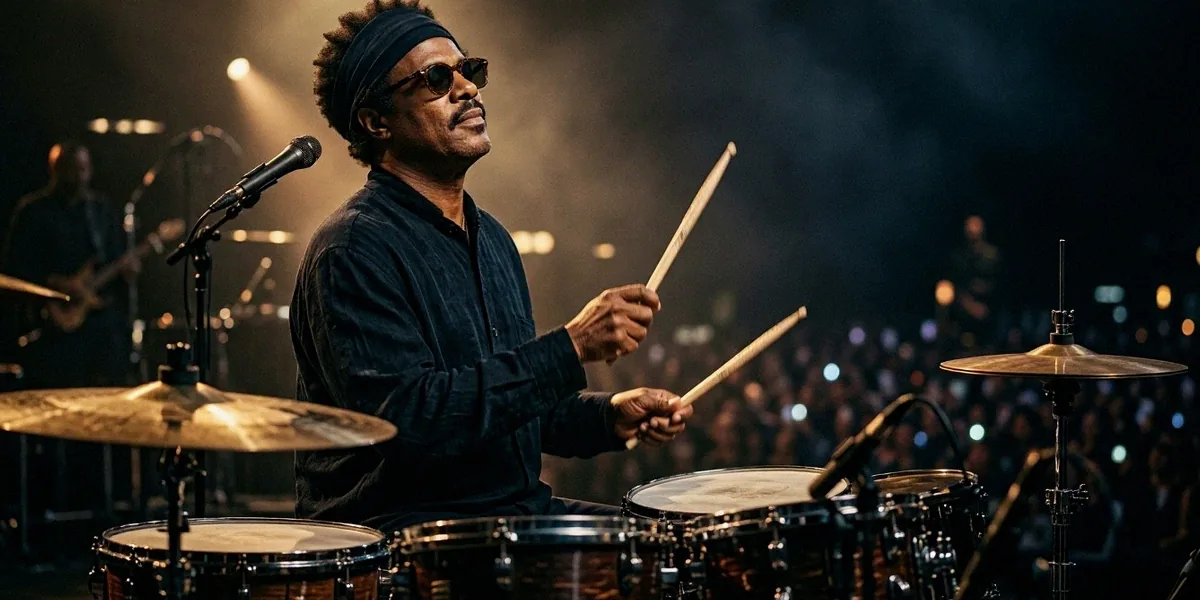
The first time we heard Stevie Wonder launch into a drum solo live, we were not ready. It started as a groove, then became a conversation, then a full sermon on rhythm. His hands moved like they were having their own private party, while the crowd stood frozen, trying to catch every beat. That moment still gives us chills, and it is the reason we wanted to dig deeper into this underrated side of his genius. Stevie Wonder is known for his voice, his songwriting, and his message, but his drumming and percussion work deserve their own spotlight. This page is our fan tribute to the rhythmic architect behind the melodies.
The Rhythmic Genius Behind the Kit
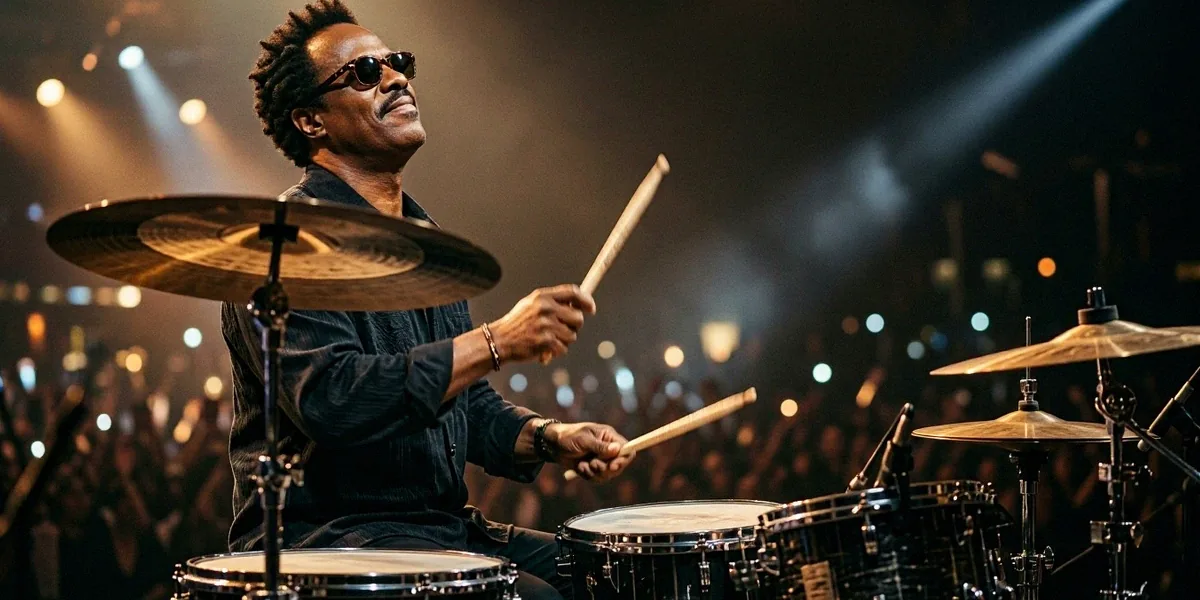
Before the synthesizers, before the orchestral arrangements, there was a kid from Saginaw, Michigan, who understood that rhythm was the heartbeat of everything. Stevie Wonder’s relationship with the drums started early, and it never really ended. Even when he became a global icon, he kept returning to the kit, treating it as a place to think, breathe, and experiment. For our team, that is what makes his story so compelling.
Motown Roots and Early Drumming
Motown in the 1960s was a rhythm factory. The Funk Brothers laid down grooves that defined a generation, and a young Stevie Wonder absorbed every one of them. He watched, listened, and then did something remarkable: he started playing the parts himself. His early recordings show a kid who was not just singing, but feeling the pulse of every track. On ‘Uptight (Everything’s Alright)’, released in 1966, the energy is undeniable. The drums snap, the tambourine shakes, and Stevie’s vocal rides the rhythm like a surfer on a perfect wave. That track alone proves he was not just a talented singer, but a rhythmic force.
Self-Taught Techniques and Signature Grooves
Stevie never sat in a formal drum class. His technique came from the stage, the studio, and the streets. He developed a style that was loose but precise, funky but melodic. He would often play drums on his own sessions, layering parts until the groove felt right. His signature move was the way he blended straight time with syncopation, creating a push-and-pull that made listeners want to move. If you listen closely to his 1970s work, you can hear him playing against the beat, not just on it. That is a drummer’s instinct, and Stevie had it in abundance.
Iconic Drum Solos in the Studio
Stevie’s studio albums are full of rhythmic surprises. He did not just hire drummers; he became one. He would sit behind the kit, lay down a pattern, and then build the entire song around it. The result was a sound that felt organic, layered, and deeply human. Let us look at a few standout moments.
Songs in the Key of Life: Percussion Layers
‘Songs in the Key of Life’ is a masterpiece, and it won Album of the Year at the 1977 Grammy Awards. But beyond the songwriting, the percussion work is staggering. Tracks like ‘I Wish’ and ‘Sir Duke’ are built on tight, joyful grooves that Stevie helped shape. He layered congas, shakers, and drum kit parts until the rhythm felt like a living organism. The album is a percussion playground, and every listen reveals a new detail. For Canadian fans who grew up with this record, those grooves are part of the national soundtrack.
Hidden Gems: Solos on ‘My Cherie Amour’ and Beyond
‘My Cherie Amour’ was released in 1969 and remains a Canadian radio staple. While it is known for its sweet melody, the percussion underneath is subtle but essential. Stevie’s drum work on that track is gentle, almost conversational, giving the song its gentle sway. Other hidden gems include ‘Superstition’, where the drum pattern locks in with the clavinet to create one of the funkiest riffs in history. Stevie did not just write these songs; he built them from the rhythm up.
- ‘Uptight (Everything’s Alright)’ – early proof of his drumming instincts
- ‘Superstition’ – a masterclass in funk drumming and clavinet interplay
- ‘I Wish’ – layered percussion that feels like a celebration
- ‘My Cherie Amour’ – gentle, melodic drumming that supports the vocal
Live Performances That Redefined His Legacy
If you want to understand Stevie Wonder as a drummer, you have to see him live. His studio work is impressive, but his concerts are where the rhythm truly comes alive. He would often extend songs, turning them into improvisational journeys where the drums took center stage. For fans, those moments were not just performances; they were experiences.
1970s: The Rainbow Theatre and Beyond
The 1970s were a golden era for Stevie’s live shows. His 1973 concert at the Rainbow Theatre in London is legendary, with extended jams and rhythmic explorations that left audiences breathless. That same year, Massey Hall in Toronto hosted a legendary Stevie Wonder concert, and Canadian fans got to witness his drumming genius up close. The energy in that room was electric, and it cemented his reputation as a live performer who could do it all.
1980s to 2000s: Global Tours and Canadian Stops
Stevie’s 1980 Hotter than July tour included multiple Canadian dates, and fans in Toronto, Montreal, and beyond packed venues to see him. He continued to tour through the 1990s and 2000s, and the Bell Centre in Montreal has been a frequent stop on his later tours. Each show featured moments where he would sit at the kit and just play, reminding everyone that he was not just a singer-songwriter, but a drummer at heart.
Stevie Wonder in Canada: Memorable Moments
Canada has a special place in Stevie Wonder’s touring history. From intimate clubs to massive arenas, he has always found a warm welcome north of the border. Canadian audiences have embraced his rhythmic experiments, and he has returned the love with unforgettable performances.
Toronto and Montreal: Fan Favorites
Toronto’s Massey Hall is a historic venue, and Stevie’s 1973 show there is still talked about by fans who were lucky enough to attend. The acoustics, the intimacy, and the energy combined to create a night that felt like a private jam session. Montreal has also been a second home for Stevie, with the Bell Centre hosting him multiple times. Fans in both cities know that when Stevie comes to town, they are in for something special.
Vancouver and Ottawa: Intimate Club Shows
Not every Canadian performance was in a massive arena. In Vancouver and Ottawa, Stevie played smaller venues where the connection between artist and audience felt immediate. Those club shows allowed him to stretch out on the drums, experimenting with grooves and rhythms in a way that larger venues sometimes do not allow. For our team, those intimate moments are some of the most cherished in his Canadian legacy.
Why His Drum Solos Still Matter
Stevie Wonder’s drumming is not just a side note in his career. It is a bridge between soul, funk, and jazz, and it continues to influence musicians today. His ability to blend genres and create rhythms that feel both complex and accessible is a rare gift. For Canadian fans, his drum solos are a reminder that music is not just about melody; it is about feeling.
Influence on Contemporary Drummers
Modern drummers often cite Stevie as an influence, not just for his songs, but for his rhythmic approach. He showed that you do not need formal training to be great; you need passion, curiosity, and a willingness to experiment. His layered percussion work on albums like ‘Songs in the Key of Life’ is studied by producers and musicians who want to understand how to build a groove that feels alive.
The Timeless Appeal for Canadian Audiences
Canadian audiences have a deep appreciation for Stevie’s live shows. Whether he is playing a sold-out arena in Montreal or an intimate club in Vancouver, his drum solos bring people together. They transcend age, background, and musical taste. That is the power of rhythm, and Stevie Wonder has it in spades.
FAQ
Did Stevie Wonder play drums on his own recordings?
Yes, Stevie played drums on many of his own recordings, including tracks like ‘Uptight (Everything’s Alright)’ and ‘Superstition’. He often layered percussion parts himself, creating the signature grooves that define his sound.
What is the most famous Stevie Wonder drum solo?
There is no single definitive solo, but his extended live improvisations during the 1970s, particularly at the Rainbow Theatre in 1973 and Massey Hall in Toronto, are often cited by fans as career highlights.
Did Stevie Wonder tour Canada often?
Yes, Stevie toured Canada frequently. His 1980 Hotter than July tour included multiple Canadian dates, and the Bell Centre in Montreal has been a frequent stop on his later tours. He also played legendary shows at Massey Hall in Toronto and intimate venues in Vancouver and Ottawa.
Why is ‘Songs in the Key of Life’ important for drummers?
‘Songs in the Key of Life’ won Album of the Year at the 1977 Grammy Awards and features some of Stevie’s most intricate percussion layers. Tracks like ‘I Wish’ and ‘Sir Duke’ showcase his ability to build complex grooves that feel effortless.
Is ‘My Cherie Amour’ a good example of Stevie’s drumming?
Yes, ‘My Cherie Amour’, released in 1969 and still a Canadian radio staple, features subtle but essential percussion work. It shows how Stevie could use rhythm to support a melody without overpowering it.
Stevie Wonder’s drum solos are not just technical displays. They are emotional journeys that connect generations of fans across Canada and around the world. From Massey Hall to the Bell Centre, from ‘My Cherie Amour’ to ‘Songs in the Key of Life’, his rhythmic genius continues to inspire, move, and unite us. We will keep listening, keep dancing, and keep celebrating the man who proved that rhythm is a language everyone can speak.