

My Cherie Amour: The Story Behind Stevie Wonder’s Timeless Classic
Those opening notes drift in like a warm breeze through an open window — a gentle guitar figure, a whisper of strings, and then that voice, young and earnest, singing “La la la la la la.” For more than five decades, “My Cherie Amour” has been the soundtrack to first dances, slow evenings, and quiet moments of longing. It is one of the most recognizable songs in the Stevie Wonder catalogue, yet it almost never saw the light of day. How did a teenage love song, recorded in 1966 and shelved for three years, become one of Motown’s most enduring ballads? We’re glad you asked, because the story behind it is as charming as the melody itself.
The Origins of ‘My Cherie Amour’
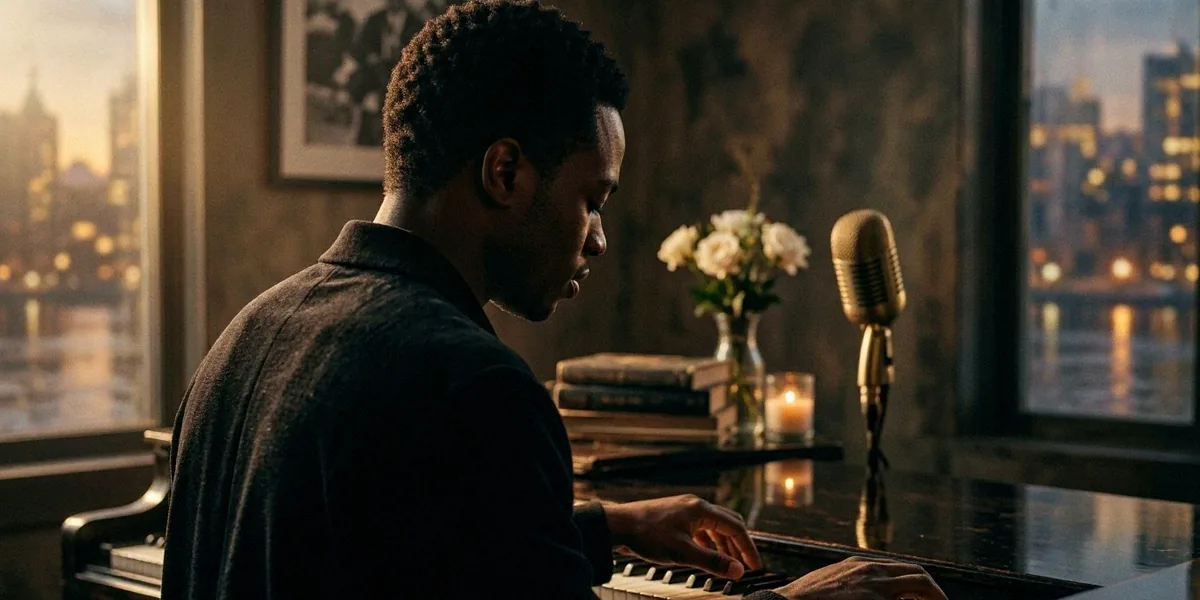
Long before it became a staple of romantic playlists, “My Cherie Amour” began as a private tribute to a young woman named Marsha. Stevie Wonder was still a teenager at Motown in the mid-1960s, and he was smitten. He and his collaborators turned that feeling into a song, and the original version carried a title that made the inspiration obvious: “Oh My Marsha.”
The track was written with two key Motown figures: producer Henry Cosby and songwriter Sylvia Moy. Cosby, who had already worked closely with Stevie on hits like “Uptight (Everything’s Alright),” was instrumental in shaping the young artist’s sound during this period. Moy, one of Motown’s most gifted lyricists, helped give the song its romantic, poetic voice.
From ‘Oh My Marsha’ to ‘My Cherie Amour’
When the decision was made to revisit the recording, the team recognized that “Oh My Marsha” was too specific — and perhaps too personal — for a wide release. The lyrics were reworked, and the title was changed to “My Cherie Amour,” a French-inflected phrase that translates roughly to “my darling love.” The shift transformed a private note into a universal declaration, one any listener could apply to their own life.
The 1966 Recording Sessions
Here is one of the most fascinating facts about the song: it was originally recorded in 1966, but it was not released until 1969. For three years, the master tape sat in the Motown vaults while Stevie continued to release other material. When the song finally emerged, the wait proved worthwhile — the recording captured a moment of youthful sincerity that could never be replicated later.
The Lyrics and Their Meaning
At its heart, “My Cherie Amour” is a song about admiration from a distance. The narrator sees someone lovely, imagines a connection, and wonders whether that affection could ever be returned. It is a theme that never ages, and Stevie’s delivery makes it feel both innocent and deeply felt.
A Love Letter in Song
Working with Henry Cosby and Sylvia Moy as co-writers, Stevie helped craft lines that are simple but vivid: a smile, a glance, the hope that “maybe someday” the object of affection will notice him. The song never overplays its emotion. Instead, it lets the longing sit quietly in the melody, which is precisely why it has endured.
The French Connection
The phrase “my cherie amour” gives the song its distinctive elegance. It is not perfect French — the more grammatically standard form would be “mon cher amour” — but that hardly matters. The phrase sounds romantic, slightly exotic, and unmistakably memorable. It also reflects the era’s fascination with continental sophistication, a quality that set the song apart from the harder-edged soul of the period.
Release and Chart Performance
When “My Cherie Amour” was finally released as a single in 1969, it connected immediately with audiences. The timing was right: Stevie was transitioning from teen prodigy to mature artist, and listeners were ready for a softer, more reflective side of his work.
Breaking Through in 1969
The single climbed steadily through the spring and summer of 1969, eventually reaching No. 4 on the Billboard Hot 100. It also performed strongly on the R&B charts, cementing Stevie’s crossover appeal. That same year, the song was included on the 1969 album ‘My Cherie Amour’, which collected the single alongside other material from this fruitful period of his career.
Canadian Chart Success
North of the border, the song was just as warmly received. It reached No. 5 on Canada’s RPM chart, making it one of Stevie’s biggest Canadian hits to that point. Canadian radio embraced the track’s gentle, melodic character, and it became a fixture on AM stations from Toronto to Vancouver. That early Canadian success helped lay the groundwork for the deep affection Canadian audiences still hold for Stevie Wonder today.
Musical Arrangement and Stevie’s Performance
Part of what makes “My Cherie Amour” so distinctive is its arrangement. Where much of Motown’s output leaned on driving drums and punchy horns, this track floats. The instrumentation is delicate, the tempo unhurried, and the mood unhurried and romantic.
The Funk Brothers’ Contribution
The backing came courtesy of the Funk Brothers, Motown’s legendary house band. Their playing on this track is restrained and tasteful, providing a soft bed of guitar, bass, and light percussion for Stevie’s voice to rest on. The strings, arranged in the Motown style, add a cinematic shimmer without overwhelming the song.
Stevie’s Harmonica Solo
One of the track’s signature moments is Stevie Wonder’s own harmonica solo. He played harmonica on the track, which was produced by Henry Cosby, and that solo remains one of the most recognizable instrumental passages in his entire catalogue. It is brief, melodic, and perfectly placed — a small jewel set into an already beautiful song.
His vocal performance deserves equal praise. Stevie was still a teenager when he recorded it, and you can hear that youthfulness in the slight vulnerability of his tone. It gives the song an authenticity that a more seasoned vocalist might have struggled to achieve.
Legacy and Covers
Few songs from the Motown era have travelled as far or as widely as “My Cherie Amour.” Its influence stretches across generations, genres, and borders.
Notable Covers and Samples
The song has been interpreted by an extraordinary range of artists. Among the most notable:
- The Jackson 5 covered it in 1969, bringing a youthful Motown energy to the track.
- Lionel Richie, a lifelong admirer of Stevie’s work, recorded his own version.
- Canadian artist Michael Bublé covered the song, introducing it to a new generation of listeners and reinforcing its special place in Canadian music culture.
- Numerous jazz and easy-listening artists have recorded instrumental or vocal versions, keeping the melody alive in restaurants, hotel lobbies, and radio formats around the world.
Pop Culture References
The song has appeared in films and television shows that lean on its romantic atmosphere. Its use in soundtracks has helped it reach audiences far younger than the original 1969 release, and it remains a popular choice for wedding playlists and anniversary celebrations. In Canada, it continues to surface on classic soul and adult contemporary stations, often during evening programming where its mellow tone fits perfectly.
Why ‘My Cherie Amour’ Still Resonates Today
There is a reason this song refuses to fade. It does not rely on trends, production gimmicks, or a particular era’s sound. It relies on a melody, a sentiment, and a performance that feel as genuine now as they did in 1969.
Within Stevie Wonder’s discography, “My Cherie Amour” occupies a special place. It sits between his early teen hits and the more ambitious work that would follow — albums like ‘Songs in the Key of Life’, which would redefine what a Stevie Wonder record could be. The song shows us the artist in transition, already displaying the instincts that would make him one of the most important musicians of the 20th century.
In Canada, the song remains a staple of soft rock, soul, and oldies programming. Streaming data shows steady, consistent plays year after year, and it is frequently included in Canadian-curated playlists celebrating Motown and classic soul. For many Canadian listeners, it was one of the first Stevie Wonder songs they ever heard — and it remains one of the most loved.
FAQ
When was “My Cherie Amour” originally recorded?
It was originally recorded in 1966 under the title “Oh My Marsha,” inspired by Stevie Wonder’s girlfriend at the time. It was not released until 1969.
How high did “My Cherie Amour” chart?
The song reached No. 4 on the Billboard Hot 100 and No. 5 on Canada’s RPM chart. It was also included on the 1969 album ‘My Cherie Amour’.
Who produced “My Cherie Amour”?
The track was produced by Henry Cosby, who co-wrote it with Stevie Wonder and Sylvia Moy. Stevie Wonder also played harmonica on the recording.
Has “My Cherie Amour” been covered by other artists?
Yes. The Jackson 5 covered it in 1969, and Canadian artist Michael Bublé later recorded his own version. Lionel Richie and many other artists have also performed it.
Why is “My Cherie Amour” still popular in Canada?
Canadian radio and streaming playlists continue to feature the song because of its timeless melody and romantic appeal. Its No. 5 placement on the RPM chart in 1969 established a lasting connection with Canadian audiences that persists today.
“My Cherie Amour” remains a beloved classic — a song that showcases Stevie Wonder’s early genius and his remarkable ability to connect with listeners across generations and across borders, including right here in Canada. From its origins as a teenage love note to its status as a global standard, it proves that the simplest emotions, expressed with sincerity, never go out of style.